

Minnesota Cannabis Banking
Ready to get started?

Discover Minnesota Cannabis Banking Solutions
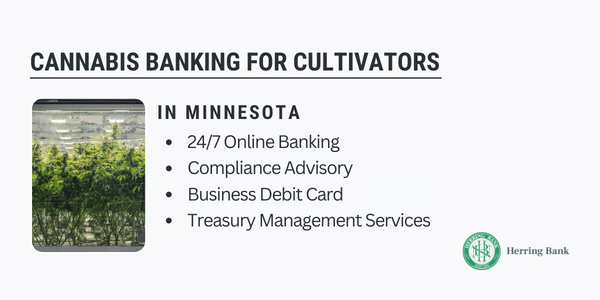
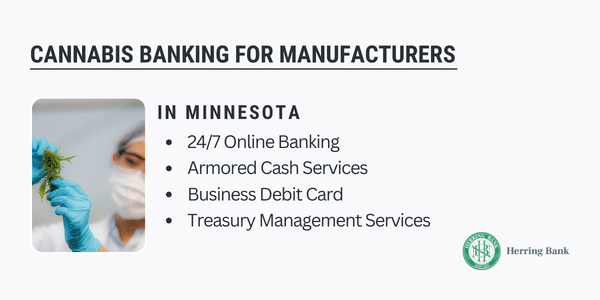
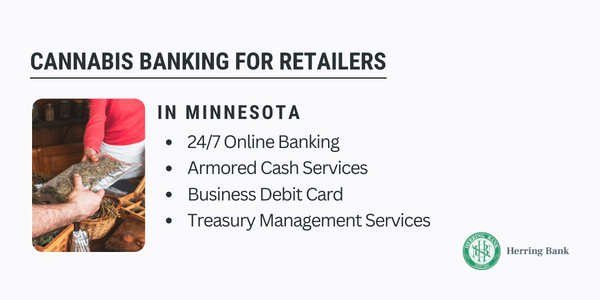
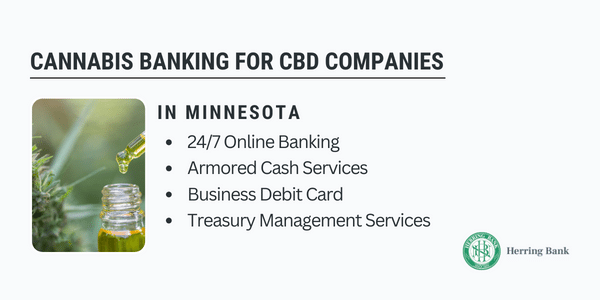
Marijuana Banking in Minnesota

2026 Cannabis Banking in Minnesota: Laws, Licensing and Market Status
Minnesota is one of the newest adult-use cannabis markets in the country, and 2026 is its first full year of state-licensed sales. Medical cannabis has been legal since 2014, adult-use possession became legal on August 1, 2023 under House File 100, and Tribal dispensaries began selling on Tribal land that same month. State-licensed adult-use retail sales followed on September 16, 2025. For the hundreds of new dispensaries, cultivators, manufacturers and microbusinesses now operating, Minnesota cannabis banking is a launch-day requirement, not an afterthought.
Minnesota’s Cannabis Law and Regulator
The Minnesota Office of Cannabis Management (OCM), led by Executive Director Eric Taubel, licenses and regulates adult-use cannabis, the medical cannabis program and lower-potency hemp edibles and beverages. Key features of the Minnesota framework:
- License types: microbusinesses, mezzobusinesses, cultivators, manufacturers, retailers, testing facilities, event organizers, medical cannabis combination businesses and lower-potency hemp businesses, among others. Licenses for cultivators, mezzobusinesses, manufacturers and retailers are capped.
- Social equity: 86% of the licenses issued in those four capped categories went to verified social equity applicants, and 43% of Minnesota’s 369 licensed cannabis businesses are owned by verified social equity applicants, according to OCM’s one-year report.
- Possession and home grow: adults 21 and older may possess up to 2 ounces of flower in public and 2 pounds at home, 8 grams of concentrate and 800 mg of THC in edibles, and grow up to 8 plants (4 flowering).
- Local role: cities and counties register retailers and set zoning and buffer rules within state limits, and must allow at least one retailer per 12,500 residents.
- Tribal partnerships: between May 2025 and March 2026, the state signed agreements with nine of the 11 federally recognized Tribal Nations that share territory with Minnesota.
Minnesota Cannabis Taxes
Adult-use cannabis and lower-potency hemp products carry a cannabis gross receipts tax, raised from 10% to 15% on July 1, 2025, on top of the 6.875% state sales tax and any local sales taxes (Minnesota Department of Revenue). From September 2025 through July 2026, the state collected $45.6 million in cannabis taxes, including revenue from hemp edibles and beverages.
Where Minnesota’s Market Stands in 2026
In the first year of state-licensed sales, Minnesotans bought about $150 million of adult-use cannabis and about $100 million of medical cannabis from licensed businesses, and more than 300 new cannabis businesses launched, OCM reported in September 2026. Supply is ramping quickly: 95 cultivators were newly licensed in June, July and August 2026, and the number of licensed plants rose 575%, from 72,083 plants at 11 license holders to 486,720 plants at 102. The medical program has also grown, to more than 90,000 registered patients after patient fees were eliminated in 2023. Legislative changes taking effect January 1, 2027 will streamline the medical and adult-use supply chains.
Minnesota Hemp and THC Products
Minnesota regulates hemp-derived THC edibles and beverages and licenses lower-potency hemp businesses through OCM. The federal hemp redefinition signed in November 2025 limits hemp-derived products to 0.4 milligrams of total THC per package and takes most of its effect on December 11, 2026 (CRS). OCM says the federal change does not alter how Minnesota law defines these products, but hemp manufacturers and retailers selling across state lines should plan for the new federal limits. Herring Bank also offers hemp banking.
Federal Changes That Affect Minnesota Cannabis Businesses
Effective April 28, 2026, marijuana covered by a qualifying state medical license moved to Schedule III, with a DEA registration pathway for state medical licensees, which matters for Minnesota’s medical cannabis combination businesses. Adult-use cannabis remains in Schedule I and subject to Section 280E. The SAFE Banking Act of 2026 remains in committee, so banks follow FinCEN’s guidance, including enhanced due diligence and marijuana-specific SAR filings.
What This Means for Banking a Cannabis Business in Minnesota
Herring Bank works with Minnesota microbusinesses, mezzobusinesses, cultivators, manufacturers, retailers and hemp businesses to open compliant business checking and savings accounts, document OCM licensing and local registration for BSA/AML review, move cash safely with pickup and delivery through our preferred armored courier, and run payroll, ACH, wires and electronic tax payments, including the 15% cannabis gross receipts tax. Ready to talk about Minnesota cannabis banking? Call 877-873-0079 or request a call back.
Minnesota Cannabis Banking Solutions: Herring Bank’s Commitment
At Herring Bank, we understand the complexity of launching and operating a cannabis-related business (CRB) in a newly regulated market like Minnesota. With state-licensed adult-use sales underway since September 2025, access to compliant and transparent financial services is more important than ever.
Our cannabis banking solutions are designed specifically for Minnesota’s regulatory landscape. From seed-to-sale account management and cash handling to merchant solutions and financial guidance, Herring Bank offers a comprehensive suite of services tailored to the cannabis sector. Our team stays up to date on state and federal developments to help CRBs remain compliant and growth-focused.
As your dedicated financial partner, we’re here to help you navigate Minnesota’s evolving cannabis economy—empowering your business with the stability, transparency, and banking confidence it needs to thrive.
Frequently Asked Questions
Can dispensaries use banks?
Yes, dispensaries and other cannabis-related businesses (CRBs) in Minnesota, as well as in other states, have the opportunity to utilize banking services through institutions like Herring Bank. Despite the intricate regulatory environment and the continued federal prohibition of cannabis, a select group of banks and financial institutions have begun to provide banking services to the cannabis industry. This change is in response to the increasing demand for legitimate financial services in the sector, encompassing secure cash handling, business checking and savings accounts, and electronic payment processing.
What types of cannabis companies do you support?
Herring Bank offers its banking solutions to a wide variety of cannabis-related businesses, such as Dispensaries, Cultivation facilities, Manufacturing companies, and Armored Transport services, among others.
What is the banking Act for cannabis?
The banking act related to cannabis, known as the SAFE Banking Act (Secure and Fair Enforcement Banking Act), aims to provide “safe harbor” protections for financial institutions. This legislation seeks to enhance the marijuana industry’s access to banking, lending, and insurance services by protecting banks and other financial entities from federal prosecution or penalties for providing services to cannabis-related businesses operating legally under state laws. The latest version, the SAFE Banking Act of 2026 (S.4942), was reintroduced in June 2026 but has not passed, so banks still rely on FinCEN’s 2014 guidance.
What are the benefits of partnering with specialized financial institutions?
Partnering with specialized financial institutions offers cannabis businesses growth opportunities, enhanced banking efficiency, and strong compliance and regulatory support. This can help improve the overall financial management and stability of the business.
What Cities do you serve in Minnesota?
Herring Bank offers Cannabis Banking Services to the following Minnesota cities: Minneapolis, Saint Paul, Rochester, Bloomington, Duluth, Brooklyn Park, Plymouth, Maple Grove, Woodbury, St. Cloud, Eagan, Eden Prairie, Coon Rapids, Burnsville, Blaine, Lakeville, Minnetonka, Apple Valley, Edina, St. Louis Park. The Bank has developed an extensive network of armored couriers to securely manage cash deposits for cannabis companies.


