

Kisan KD10 Smart Safe: Features, Capacity and How It Works
Talk to our business banking team Herring Bank · NMLS #415783 · No obligation
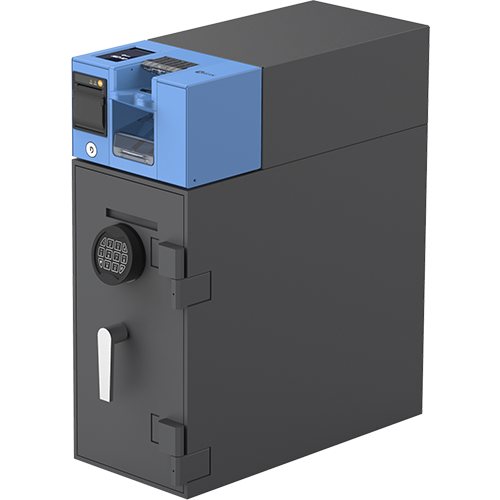
The Kisan KD10 is a front-office smart safe for businesses that take in a lot of cash at the counter. Its validator checks and counts bills at up to 300 notes a minute, rejects suspect notes to a separate tray, and stores up to 2,000 notes in a sealed cassette or 4,500 in a canvas bag. Cashiers can deposit but can’t open it, managers open it with a Smart Button, and every drop is logged to a user ID and printed on a receipt.
The KD10 is the smart safe Herring Bank offers through its smart safe service. Paired with Daily Deposit Credit for qualifying customers and scheduled armored pickup, the safe’s deposit record is what lets the day’s cash reach your business account without a second count at the bank. This guide covers what the KD10 does, its specifications and how a typical business uses it.
Key Takeaways
- The KD10 validates and counts bills at up to 300 notes per minute and rejects suspect notes before they are stored.
- It stores up to 2,000 notes in a sealed cassette or 4,500 notes in a canvas bag, with a 100-note inlet and a 100-note reject tray.
- Cashier IDs can make deposits and run end-of-shift reports but can't open the safe; manager IDs can open it and run end-of-day reports.
- USB, network and wireless connections let the KD10 report deposits and integrate with PC, POS and kiosk systems.
- With Herring Bank's smart safe service, qualifying customers receive Daily Deposit Credit for the verified deposits, and our preferred armored courier collects the cash on a schedule.
What Is the Kisan KD10?
The KD10 is a smart safe from Kisan, whose U.S. arm, Kisan America, is based in Carrollton, Texas, and sells currency counters, currency sorters, smart safes and cash recyclers. A smart safe is a locked safe with a built-in bill validator: instead of dropping an envelope through a slot, the cashier feeds the bills into the validator, which authenticates and counts each note before it falls into secure storage. The safe then knows exactly what it holds, by note and by user, which a traditional drop safe never does.
The KD10 is sized for the front office or the back of a counter rather than a cash room. It suits retail stores, convenience stores and gas stations, restaurants, check cashers and other businesses that collect currency through the day and want it out of the drawer quickly. For background on how smart safes work in general, see what a smart safe is.
Kisan KD10 Specifications
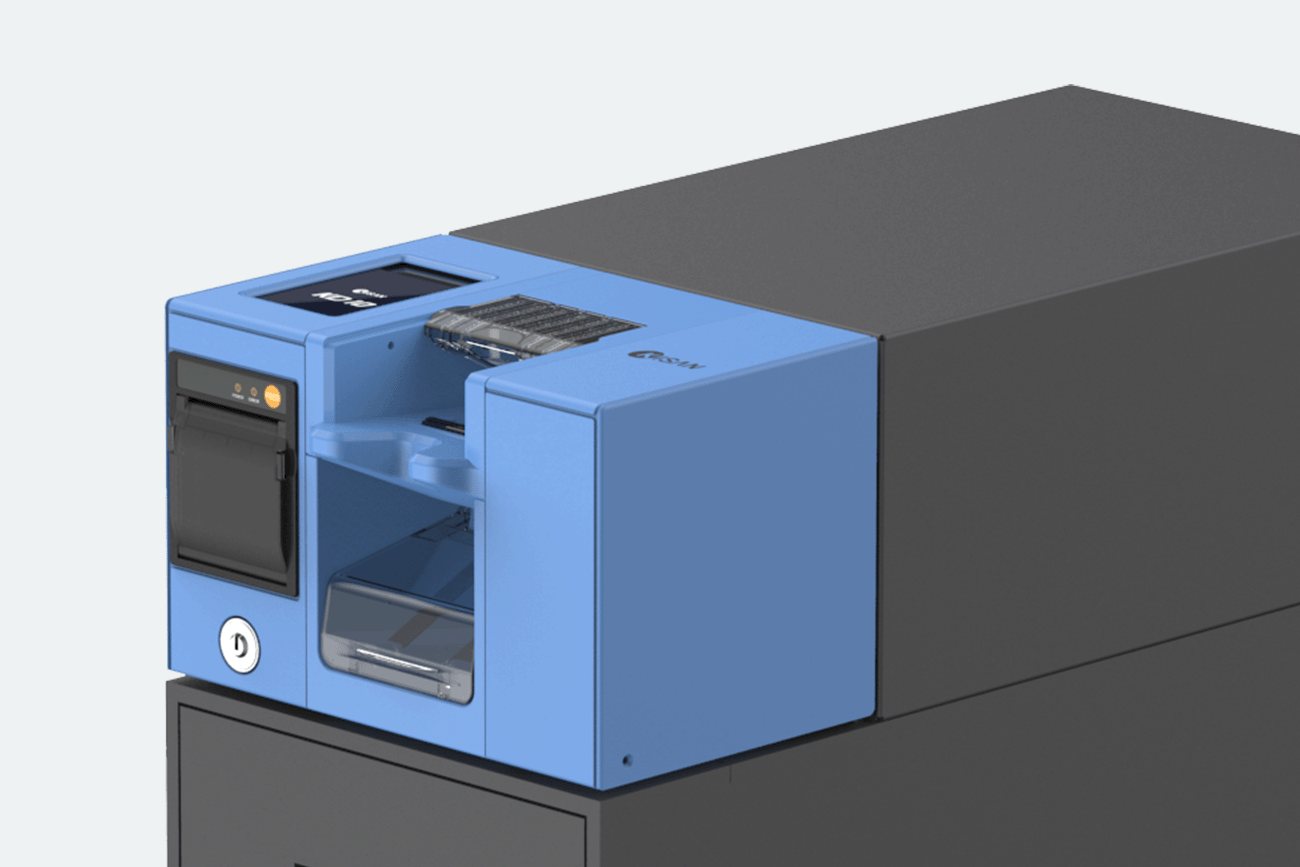
| Specification | KD10 |
|---|---|
| Validation and transfer speed | Up to 300 notes per minute (about 5 notes per second) |
| Banknote inlet | 100 notes |
| Reject tray | 100 notes |
| Feed direction | Short edge first |
| Storage, cassette | 2,000 notes |
| Storage, canvas bag | 4,500 notes |
| Note checks | Counterfeit detection and serial number reading (OCR) |
| Currencies | 40 currencies |
| Service access | Front service access |
| Display | 4.3-inch touchscreen (480 x 272 pixels) |
| Printer | Built-in receipt printer, 2-inch paper |
| Connectivity | USB, LAN and wireless; PC, POS and kiosk integration; remote management |
| Operating system | Linux |
| Power | 100 to 240 volts AC |
| Dimensions | 10.6 x 23 x 27.6 inches |
| Weight | 102 pounds |
Specifications are from Kisan America’s KD10 product page and are subject to change by the manufacturer.
How Deposits Work on the KD10
A KD10 deposit takes a few seconds, and the cashier never handles the stored cash again.
- Sign in. The cashier enters their user ID, so the deposit is tied to them.
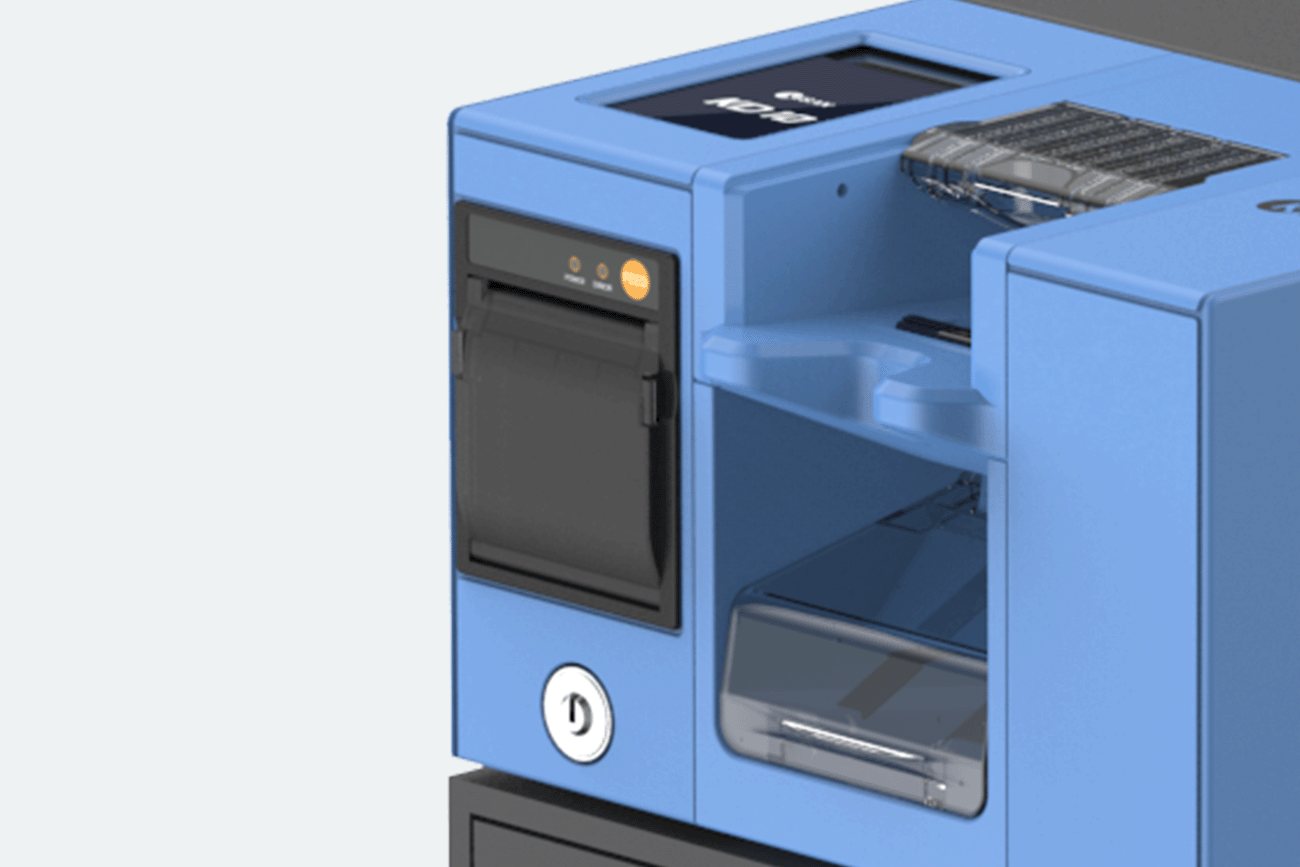
- Feed the bills. Up to 100 notes go into the inlet. The validator checks each note and counts it.
- Rejects are returned. Notes the validator can’t accept go to the reject tray. The cashier can re-feed them or use the manual deposit slot on the front of the safe for an envelope drop.
- Print the receipt. The safe prints a receipt for the drop and adds it to the running total for the shift and the day.
Most businesses set a drawer limit and have cashiers drop cash whenever the drawer passes it, at shift change and before the daily cutoff. The more often cash goes into the safe, the less sits exposed at the counter.
User Roles and Security
The KD10 separates the people who deposit cash from the people who can retrieve it.
- Cashier IDs can make deposits and print end-of-shift reports. They can’t open the safe or reach the cash once a deposit is complete.
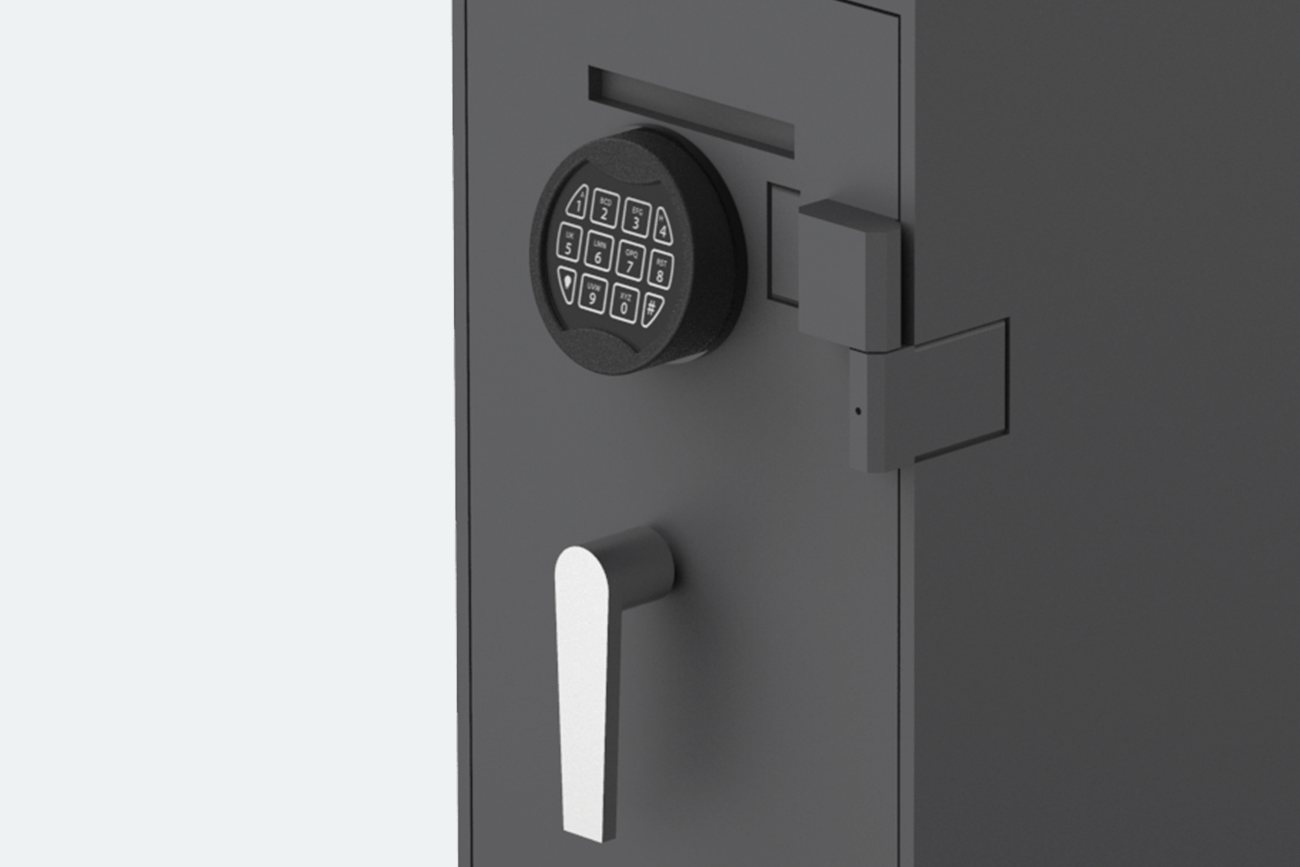
- Manager IDs can run end-of-day reports and open the safe. The manager presses the Smart Button and has 60 seconds to open the door.
- Sealed storage. When the safe is opened, a slide lock secures the bag or cassette, which is opened with a key at the processing location rather than in the store.
- Top access for service. The top of the unit opens with a key for cleaning and clearing jams, without exposing the stored cash.
Because every deposit is tied to a user and a time, a short drawer or a disputed drop has a record to check. That record also supports cash reconciliation and the internal controls a cash-heavy business needs.
Reporting and Connections
The KD10 prints end-of-shift and end-of-day reports at the safe, and its USB, network and wireless connections let it send deposit data to back-office systems. Kisan lists integration with PC, POS and kiosk systems, plus remote management. In a bank smart safe service, the safe’s daily totals are what the bank uses to credit the deposit before the cash is picked up.
Using the KD10 with Herring Bank’s Smart Safe Service
On its own, a smart safe stores and counts cash. Herring Bank’s smart safe service adds the banking side:
- Daily Deposit Credit for qualifying customers, so verified deposits are credited to your Herring Bank business checking account. How Daily Deposit Credit works.
- Scheduled armored pickup by our preferred courier, who collects the sealed cassette or bag.
- One relationship for the safe, the courier and the account.
Check cashers and money service businesses use the KD10 to take teller-line cash out of drawers through the day; see smart safes for check cashers and MSBs. Licensed cannabis businesses are served through our separate cannabis banking program.
Is the KD10 the Right Size for Your Business?
Size the safe to the cash you take in between pickups. A 2,000-note cassette holds about $40,000 in $20 bills, and the 4,500-note bag holds about $90,000 in $20s, though a real mix of denominations fills it with less value. If your busiest stretch between pickups regularly fills the storage, choose the bag, schedule more frequent pickups or ask about a larger unit. For a comparison with other cash equipment, see smart safe vs. drop safe vs. cash recycler.
Frequently Asked Questions
Ready to take the next step?
This article is for educational purposes only and does not constitute financial, legal, or tax advice. It is not a commitment to lend. Loan programs, rates, and eligibility requirements are subject to change without notice. Consult a qualified professional before making financial decisions.


